Tuesday, July 27, 2010

How Can I Get My Extensions Smooth & Silky?

Five questions on the Oder River Rhine

only Polish city to which the water runs from the west shoulder, of course, Szczecin. I still remember always linked back to the country of emotion. After mooring barges usually the whole crew was going to their homes. Only that in the late 80's and 90 siątych-tenths of a bygone era, not only swam to Szczecin. Polish boats sailed to Kostrzyn, Cross, estuaries, Poznan, Wroclaw, Opole and Kedzierzyn-Kozle.

Then there was a democracy and as a result of ingenious reform reorganized all the bodies involved in water management. First of all, liquidated almost all companies Hydro and allowed the river to ourselves. Nobody has good heads, not the trough deepens, no cut riparian thickets. Fairly quickly this method to deal with the Polish rivers prevented the shoulders swimming after them. Following these events it was necessary to eliminate the inland ports, to which no boat could not swim.

Unfortunately, there are also other consequences of the withdrawal of a Member of the recovery of maintenance of waterways. Savagery and devastation of Polish rivers led to the hydraulic structures that not only the vessels can not swim after them but also the water flows more slowly contributing to the flooding. It would seem that when water is flowing state, it is to submit the state should keep them in good condition, but apparently it is not so obvious. So far, we have so far inland waterways assured communications between Szczecin and the West by the Western Oder, which is a border river, so take care of it Germany.

Monday, July 26, 2010

Saline Sinus Rinse Ratio

notes of Oswald Spengler

, The Decline of the West 'was probably the most successful journalistic political book of the twenties. Ironically, intention and action history are disparate: while Spencer had the intention of his book - the first volume is still published during the war - The expected, so certain victory of the German Reich to justify the philosophy of history, the reading public was hoping to make the defeat by the book, to interpret the world after the lost war can be. In these expectations the time bundled spirit after 1918, the uncertainty of the German people in the face of the new democratic form of government and the faint-like posture in the face of the output of the war. The following is a cursory glance will be thrown on the particular political ideas Spengler. Therefore, his main work only in passing, to the analysis of his actual political views, his criticism of the liberal-democratic form of government suited his other writings much better. Still can not dispense with a sketch of his philosophy of history, it is still based on his thoughts to politics.


The will to power

Oswald Spengler in 1880, the son of postal workers Bernhard Spengler and from an artistic marriage dating and born of a heritage financially independent Pauline Spengler. [1] in 1911 allowed him an inheritance, as to pay private scholar's studies. Even in his youth he was fascinated by the works of Friedrich Nietzsche. This was also a decisive influence on his later thinking, here he ran his elitist self-understanding: "I'm always Aristocrat been. Nietzsche was saying to myself, before I knew anything about him. "[2] key to Spengler was propagated by Nietzsche, the will to power ', which he called a top priority in his political thinking. Thus, saw Spencer's will to power "not as a fundamental process or principle of all existence, but as a spiritual base property of the Faustian man (...)." [3] He concluded that "the decisive test of Western culture, but it [would] that the rule of thought and the will to power in all areas of life prevailed. "[4] The now emerging opposition between reason and Will Spencer ruled in favor of will, "includes (...) the whole gamut of human impulsiveness and can replace the creative intelligence." [5] By the very emphasis on the will to power in all areas of life, the policy by Spengler the maximum internal political authority and a consistent foreign policy, granted, but this does not apply equally to the economy, as Spengler called the "subordination of economic performance to political objectives (...)" [6]. This limitation of economic power is both a rejection of the classical liberal claim of full free trade as also a contradiction of the claim of striving for power, as are the subordination of the economy in the first place the state should and can thus be only the State is conceded to be the highest authority of the absolute will to power. Thus filled Spengler "the vacuum left by the philosophy of Nietzsche" with a frequently occurring conflict [7], because he differed in his political vision of a state of his philosophical position, even though his intention was the combination of philosophy, economics and politics.


The First World War and its consequences

As on 1 July 1911, the German gunboat Panther 'in front of Agadir (Morocco) was at anchor, so as to send a clear message to France, Germany continued to pursue his great power interests, the world was facing an escalation of military aggression. This event was for Spengler a kind of awakening experience ". Put together in 1911 (...) I had a plan, my thoughts on Germany (...) (this idea then is my philosophy of history masterpiece created)" [8] This began the actual literary heyday Spengler, who, inspired by the idea of \u200b\u200ba coming war, the fighting, as many of his contemporaries, and heroic, even after the surrender of the German Empire in 1918, as the legitimate continuation of politics by other means provided: "World history is the state's history. State history is the history of wars. "[9] However, Spengler participated in the First World War because of some physical infirmity not participate. Therefore, he devoted himself entirely to the preparation of his work, The Decline of the West '.


The November Revolution

strengthen and confirm his elitist attitude and his created world model was Spengler in the events of 1918. The deep disappointment with the military defeat of the German Empire led to a strict disapproval and even contempt for the masses Now for the first German Republic took to the streets ". So we do the stupidest and most cowardly, honest and uninspired revolution in world history" [10] The rejection of the revolution Spengler explained in his book, Prussia and socialism ', which he in summer of 1919 as a direct response to the unrest in Germany and wrote his first real work was political.
it turned Spengler, first, that "[is] the classic country of the Western European revolutionary France. The sound of the ringing words, the blood flows on the pavement (...) -. All this corresponds to the sadistic spirit of this race "[11] Revolutionary agitation in England certified Spengler A dedicated, without a "revolutionary melodrama" [12] and specific action. Germany, however, he said neither of the two mentioned forms of the coup attempt: "What do we want? We only bring to both caricatures of Art "[13] This difference of the two West European countries has now been cited as evidence of the different historical development, which produced just in England liberalism and democracy in France. In Germany, however, there was no organic growth of these ideas, for Germany Spengler saw only the Prussian socialist: "The English decided instinct: the power belonging to the individual. Free Battle of the one against the other; triumph of the fittest: liberalism, inequality (...). The French instinct: the power belongs to no one. In no order, that no order. (...) The German Revolution, however, arose from a theory. was the German, Prussian accurate instinct: the power belongs to the whole. The individual serves him. The whole thing is sovereign. "[14] Thus Spengler was not from the general validity of the claim to universality equipped with ideas of liberalism and democracy, not every nation can take to realize these ideas and forms of organization and. In the cycle of history is not the reason decisive, but the 'instinct'. Thus Spengler presented with the rhetorical question "Do we ever about by revolution?" [15] clearly states that Germany should have in his understanding of history, no ambitions of the Revolution, he even claimed that Germany was essentially an "authoritative socialism (...) understand, illiberal and anti-democratic (...). "[16]


The philosophy of history Spengler

To Political Analysis Spengler to, it is necessary, just his philosophy of history, which he mingled with a philosophy of culture represent. Here, Spengler noticed less Nations, rather than cultures or cultural groups, which periodically ascend and descend. Using eight high cultures (Egypt, Babylon, India, China, Apollonian 'ancient, magical' Arab, Mexican culture and fist-sized 'Western world), he described in his book, The Decline of the West' the constant boom and bust of the great world cultures. Each culture then passes through the phases of the early period (Dorik, Gothic), a maturation period (Dionysius, Renaissance), a late period (Ionics, baroque) and an aging phase (sophistry, education). These cycles can then be proved to all cultures and are therefore generally valid. This Spencer rose to the claim, "predetermine history". [17] Spengler also differed between culture and civilization. This, of Faust 'West changed, so Spengler, 19 Century from a culture in a civilization. Spengler saw the difference and explains it by reference to the image of organic and lifelike peasantry and the inorganic, traditions, and yet culturally barren town. [18] Accordingly, had the "bureaucracy, rule conquered and ruled the Western tradition." [19] This was Spengler for the loss of the old value system, illustrated by the nobility, privileges, etc., a clear indication of the metamorphosis of Western Culture in Western civilization.


Caesarism

Based on the philosophy of history developed Spengler now a forecast of the political development of the West. The era of wars began, according to Spengler in 1911, the ideas of liberalism and parliamentary democracy were just a "transition, from the late period with its growing forms to the era of great individuals in the middle of a formless world that has become." [20] The form of rule the post-democratic society named Spengler to the Caesars of antiquity to his idea of \u200b\u200bthe range of those in power clearly pointed out. The Caesarism develops distinctive from the historical cycle, since it "must be demonstrated to all cultures." in [21] The rule is now in the hand of a person or group of persons that are made by special properties for such a position. On the political order Spengler noted thus: "And therefore, every institution, they may still be maintained so embarrassing, from now on without meaning and weight. Importance has only the personal power which Caesar or exercises in his place someone with his ability. "[22] Spengler aristocratic ideas, and the longing for authoritarianism at home and especially after a thorough and consistent foreign policy, particularly after the disappointing course of war and rejected with all their democratic system of Weimar, was symbolized in the image of Caesarism. Spence praised the stands of companies in the past centuries: "But the history of these classes and objects is world history in the highest power." [23] With the decline of that old system of the stands now lacks the creative power of the upper layers. Artificial ideals that were the apparent equality and freedom propagated, but this is so Spengler, only be a brief interlude in the vast cycle of world history, as the grave struggle between the weak idea the liberal-democratic political system and the unstoppable and strong era of the Caesars had already begun. This yearning for a strong authority beyond the old German Empire was symptomatic of the Weimar Republic, Spengler was not the only one so young conservatives, who created such a mental construct.


criticism of democracy and liberalism

"All the anti-liberal state performances were antitheses to the state of the Weimar Republic and his idea." [24] The disappointment over the outcome of the war and the anger about the revolution of 1918 led by the right-wing intellectuals of the Weimar Republic into a devastating Judgement on democracy. This also applies to Oswald Spengler. Disgusted by the November Revolution, he had only contempt for the masses remain. As often found no detailed discussion was held with the democratic concepts. Spengler held that the political part A, the precursor for the defeat of 1918, regardless of ideological orientation. [25] The ideological differences within the population felt Spengler as artificial, since it could not be the object of a people, outside of internal weakness to show weakness. This is the ideological view to Spengler's unnatural, because he does not dispute, but as an inner unity of the virtues of the German demands: "The Prussian type is it that the individual will rises in the general will." [26] The contrary was his image of Weimar party state in negative terms: "From the fear of losing share of the booty was taken on the Grand Duke's velvet chair and in the pubs of Weimar German Republic, no form of government, but a company. In its statutes, not by the people in it, but by political parties, not of power, of honor and greatness, but of parties. We have no country anymore, but parties, no rights, but the parties;. No goal, no future, but the interests of parties "[27] However, this was in accordance with his philosophy of history only a transitional stage to Caesarism: "The end of democracy and its transition to Caesarism expressed reason is that not the party of the third estate, liberalism disappears, but the party as a form at all." [28] Nonetheless, accepted Spengler the elite selection function of the party organization, especially in view of strong leaders. [29] As
fundamental evil of the developments considered Spengler the power of money, so he complained even ironic that the money had not been mentioned as a factor of political power in the constitution of the Weimar Republic. Thus, he did not see the sovereignty of the people embodied in democracy, but noted: "In the form of democracy, the money had triumphed." [30] saw in the classical liberal ideals Spengler no progress and no benefit, he judged them with the criteria of his rejection of the monetary rule: "belongs to the professional ideals of non-state both respect for the large numbers, as in the concepts of equality for all, the innate rights and continue the principle of universal suffrage is expressed, and the freedom of public opinion, especially the freedom of the press. These are ideals, but in reality the freedom of public opinion is the processing of this opinion, which costs money, freedom of the press to the possession of the press, a question of money , and the right to vote an election agitation, which remains dependent on the wishes of the donor (....). All the concepts of liberalism and socialism have been set in motion only by money in the interest of money. "[31] Only the onset Caesarism will end the dictatorship of money" and help the political side of life to victory.
Spencer also rejected from the elected government decided. Spengler was one of "the strength and unity of leadership, governance, authority, without which the seed is not actually exist" [32] for the basic requirement of a state that could not provide the coalitions of the Weimar Republic. Here he reveals clearly his deep connection to the leadership style of the 18 States Century and again repeated his desire for a strict and authoritarian leadership. He also rejected the idea of \u200b\u200bpopular sovereignty, decided: "At the most fatal is the ideal of government of the people, by themselves' But a nation can not govern themselves, as little as an army can carry out itself. It must be governed and it wants that too, as long as it has healthy instincts. "[33] The elected representatives of the people under its self-interest and arbitrariness Spengler, since they are subordinate to any authority.


criticism of parliamentarism


The refusal of the parties had now also refusing to follow parliamentary form of government, which was also extremely rigorous, as it was by the German parliament's policy does not "act" but "a chatter, a principle" [34]. Spengler saw in the parliamentary system, the "continuation of the bourgeois revolution by other means." [35]
However, his criticism should never be understood universal. Spengler certifies such as England through the historical development, which he on the instinct of the Englishman, the insularity and the well-organized nobility, the motherland of parliamentarism to be. The historic development was now for Spengler, of the British the "Viking Spirit" ascribes to, from, the free traders, and Prussia, in contrast to the "religious spirit" ascribes the main reason to reject the parliamentary system: "This is, parliamentary form of government, 'a specifically English greenhouse and without the entire requirements of the English Viking character, without, the insularity and a centuries-old development, which are welded to the ethical style of the people with this style of management entirely, not yet live up to with any chance to even nearly the same success in imitating their methods. Parliamentary system in Germany is nonsense and betrayal. "[36] Thus denied Spengler the democratization of Germany - and the word Prussia says Germany - due to those emanating from him claim that in Prussia never dominated a purely private company, since each "(...) within the living with the precision of a good machine operating system (...) "belonged to [37] and this system as a member. Thus, the Spengler continues, was also not a pure private sector in England, so was "(...) Management does not lie in the hands of private individuals, as it requires the parliamentary system." [38] This was, according to Spengler "Official" the political leaders was therefore an official, a "servant . Of the whole "This difference between nations, based on opposed systems and the logical refuses any liberal universalism led Spengler continues:" Democracy was here never mean private freedom, which coincided with commercial freedom and necessarily lead to a private policy had to . which serves the state as a tool "[39] The English parliamentary system certified plumber even the congruence with the" (...) cabinet diplomacy, anti-democratic origin is based on this the secret of his success "[40]..


against the constitutional state

"What we now call 'order' recognize and to adopt liberal 'constitutions, is nothing but a habit become anarchy. We call that democracy, parliamentary system, self-government people, but actually it is the absence of their responsibility authority, government, and thus a real state "[41] summarized Spengler 1933rd Spengler calls for a statesman who decides practical and impulsive, but is the highest authority, and therefore can not be attacked: "The born statesman is especially connoisseurs, connoisseur of the people and expert on the situation." [42] From these considerations he drew the conclusion that the written Constitution, the supreme Premise should take in one state. For Spengler only had only his ideal of the statesman, the "fact people" [43], for the "truths - or mistakes, which is the same - (...) only as a spiritual flow into account [would], the intensity, duration and direction He [view] and the fate of steered by him power in his statement [Agent] "[44] The first priority, the Government and its external effects;. is therefore a written constitution is not useful because no such authority radiating, but simply a born statesman, whose properties also required by education be encouraged "not of rights or constitutions, not of ideals and programs (...) depends on the fate of a people, but first and foremost on the skills of the ruling minority. We need to cultivate these skills or perish (...). "[45]


against the classical economic liberalism

Spengler closes as a historian his eyes from the effects of capitalism and argued bitterly against the principle of complete free trade without However, departing from his basic belief-sized, and his romantic-transfiguring view is also supported at this point to light he enthused by a collective state, a romantic unit of society. This he saw in the Prussian state apparatus realized: "A society of 'self' without the pathos of a strong, uniformity creative attitude to life is always something ridiculous." [46] This is precisely what it was in Prussia, not just this is a contradiction to the Prussian-German Art Spengler favored the stylized view he has of Prussian, in which a submission takes place the whole under a common will. Here he spoke of socialism, but it borders this is clearly dependent on the school of Marxism, as developed Marx, Spengler, his theory on the examples of England and this is wrong according to his understanding of history of organically grown structures. Not the "robber principle of free action, to which a philosophy of struggle of all against all" [47] to the German people was adequate, but "(...) the idea of \u200b\u200bsocialism in its deepest meaning: the will to power, not fight for the happiness of the individual but of the whole. "[48] assessed Spengler Thus liberalism as" (...) a thing for fools. He cajoled, he does not own. "Along [49] with this performance was his definition of possession, which was also greatly inspired by the romantic tradition of glorifying the Prussian landowners 18th Century. Spencer criticized the classical English liberalism and found that contrary to his conception of the Prussian socialism. So he wrote on the grounds of Adam Smith economics, they measured themselves, "(...) the people as an accessory to the economic situation and look at the history of the concepts of price, market, and goods made to explain." He originated the view of the work is not remembered as a purpose in life and career, but as a commodity with which drives the working end of trade. "[50] This assessment of classical liberalism, Karl Marx and his theory of alienation of the worker, even if Spencer even this Parallel and did not see chosen not to. bristled [51] Spengler saw the property is not "(...) vice, but a talent, that are the least able." [52] Thus, this illustrates his sized ideal, because this talent only by the result " (...) a long breeding by senior men and women (...) "[53] can be. This education was therefore only certain Spengler able Ideally the individuals, this is a cross-connect to classics of liberal thought (Rousseau) is conceivable, which have also called for education on a certain ideal, but the exclusivity of the opinion Spengler's not compatible with liberal ideas. Spengler education towards a conscious view of the property has priority as a goal: "But the Prussian style requires not only the primacy of national politics from the economy, the discipline of a strong state, which requires the free initiative of the private entrepreneurship (...)." Thus, [54] Spengler spoke of a strong state with a private sector, however, is through education of the players only to the national interest and that does not voluntarily submit to the state.


Spengler of state and government draft

addition to the massive criticism of the rule form of liberal democracy Spengler, in his work, new construction of the German Empire 'is a alternative state design sketches. As a top priority therefore is the selection of the most capable group that understands govern. This results in reduced following evaluative state that: "The governmental power must be strengthened to an extraordinary degree. The Chancellor has to have a dictatorial position, he will have to appoint the ministers and bear all the authority and responsibility for the government. He can pull a State Council of Notables expert advice. The Reichstag, resulting from general elections occur only twice a year for short formal meetings to decide on laws and the budget and adopt the annual report of the Government or reject. Its members are responsible for their roll-call vote to adopt on the elected representatives of the people for them against each man. 150 meet;. It should be louder knowledgeable people "[55] This image is the conclusion from Spengler's philosophical and political ideas. The government "(...) shall at any time the right [have] to ask through elections the people to judge their representatives." [56] Spengler envisioned a rule of officials, but he took this case suggested that each provides access to the bureaucracy be and that everyone should benefit from his abilities the opportunity to ascend: "The recent Kassenbote should be allowed to move up with a jump to the private secretary of a Director-General, if this his the trusts (...) "[57] This idea follows Spengler called for in educational opportunities equal opportunities, he wrote that to Graduate" (...) notify each must [should], without regard to age, sex, status and educational background. "[58]


Conclusion

Oswald Spengler's concepts and theories are controversial, and occasionally downright unworldly. However, they were reflected in a climate of social and political uncertainty, reflecting views that the population were popular. Not for nothing was Spengler, The Decline of the West 'one of the best books published during the Weimar Republic. His political ideas came primarily from the opposition to the liberal-democratic constitutional state, she negated, however, this was in the Weimar Republic widespread - certainly the refusal of the acceptance of democracy is one of the many reasons that led to the 'takeover' of 1933. Spengler was also with his views as a pioneer of the Nazi government. After initial uncertainty, however, he distanced himself by and by the Third Reich, where he just did not see his ideals realized.
timeliness erlang Spengler History culture and philosophy in relation to Samuel P. Huntington's book "The Clash of Civilizations" (1996), so his ideas should be considered, despite some contradictions and controversial issues entirely.

----
[1] See Felker, Detlef: Oswald Spengler. Conservative thinkers between the Empire and dictatorship, Munich 1988, p. 12.
[2] and references therein. By: Koktanek, Anton Mirko: Oswald Spengler in his time, Munich 1968, p. 53
[3] Felker, supra, p. 163
[4] Eckert, Karin Erika: Oswald Spengler and the modern cultural criticism, Phil. Diss Bonn 1980, p. 39
[5] Ibid., P. 20
[6] Spengler, Oswald: Years of Decision, Munich 1933, p. 70
[7] See Felker, supra, p. 158
[8] and references therein. By: Koktanek, supra, p. 129
[9] Spengler, Oswald: Prussian and socialism. In: Political Writings, Munich and Berlin, 1932, p.55.
[10] Spengler, Oswald: Political Writings, Munich and Berlin 1932, p. VI.
[11] Spengler, Oswald: Prussia, supra, p. 11
[12] Ibid.
[13] Ibid., P. 12
[14] Ibid., P. 15
[15] Ibid., P. 11
[16] Ibid., P. 15
[17] See Spengler, Oswald: The Untegang of the West. Outlines of a Morphology of World History, Munich 2003, p. 3
[18] See Eckermann, op cit, p. 33
[19] Ibid., P. 34
[20] Spengler, Oswald: The State, Munich 1924, p. 117
[21] Ibid., P. 118
[22] Ibid., P. 138
[23] Ibid., P. 6
[24] Sontheimer, Kurt: anti-democratic thinking in the Weimar Republic, Munich 1968, p. 212
[25] See Spengler, Oswald: Construction of the German Reich. In: Political Writings, Munich and Berlin 1932, p. 118
[26] Spengler: Prussia, supra, p. 39
[27] Spengler: New, supra, p. 194
[28] Spengler: The State, supra, p. 161
[29] See Eckermann, op cit, p. 86
[30] Spengler: State, supra, p. 138
[31] Ibid., P. 99
[32] Spengler: years ibid, p. 24
[33] Ibid., P. 26
[34] Spengler: Peußentum, supra, p. 17
[35] and references therein. By: Eckermann, op cit, p. 50
[36] Spengler: Prussia, supra, p. 57
[37] Ibid., P. 63
[38] Ibid.
[39] Ibid., P. 64
[40] Spengler: State, supra, p. 100
[41] Spengler: Annual, op cit, p. 24
[42] Spengler, State, op cit, p. 148
[43] Ibid.
[44] Ibid.
[45] Spengler: New, supra, p. 204
[46] Spengler, Prussia, supra, p. 37
[47] Ibid., P. 52
[48] Ibid., P. 43
[49] Ibid., P. 35
[50] Spengler: annual, supra, P. 76
[51] See Felker, supra, p. 108-114.
[52] Spengler: Annual, p. 70
[53] Ibid.
[54] Ibid., P. 138
[55] Hinze, Otto: collective review of Oswald Spengler. In: Journal of Institutional and Theoretical Economics 79, 1925, p. 542
[56] Spengler: New, supra, p. 211
[57] Ibid., P. 225
[58] Ibid., P. 237

Thank You Letter After Interview Hair Stylist


float on the shoulders of the Polish word "Bydgoszcz", although this rarely happens recently. The most common use of the Germans, Dutch, Beldzy, French and Swiss, but you can meet units on the Rhine with the Czech flag. Besides that, this river has a lot of traffic, flowing after it always had in sight a few dozen, and sometimes even a few dozen other units, I can assure you that it is not no shallows. Bridges are so high that swim at the medium level not once had to put the mast of the flag of the owner, whose length is 12 meters.

level of water in the Rhine changes much more frequently than in the Vistula but the edges are reinforced and prepared for this, do not happen is not controlled strokes. The with these changes in water level (up to 7 meters), all situated on the Rhine berth must be properly prepared. Sometimes they are floating platforms, but most are long metal poles stuck in the bottom of the river with the positions of mooring boats have different levels. These columns are equipped with a ladder, where you can enter the high embankment, which leaves even at low water.

Friday, July 23, 2010

How To Make A Polly Pocket Clothes

40:1

musically rather suboptimal, but good subject (after all, a Swedish band).


Baptised in fire 40 to 1

So silent before the storm, awaiting command A few
has been chosen to stand as one outnumbered by far
The orders from high command „fight back hold your ground“
In early september it came a war unknown to the world

No army may enter that land that is protected by polish hand
Unless you are 40 to 1 your force will soon be undone undone

Baptised in fire 40 to 1
Spirit of spartans death and glory
Soldiers of Poland second to none
Wrath of the wehrmacht brought to a halt

The 8’th of september it starts the rage of the reich
A barrage of mortars and guns stand fast the bunkers will hold
The captain has pledged his life „I’ll face my fate here“
The sound of artillery strike so fierce the thunder of guns

So come bring on all that you've got Come hell come high water
never stop Unless you are 40 to 1 your lives will soon be undone undone

Always remember a fall
soldier Always remember fathers and sons at
was buried in history

------

Władysław Raginis

is battle of Wizna

Historian Dr Tomasz Wesołowski believe that the myth of the Battle of Wizna not Realtität equivalent (Interview , Polish)

Thursday, July 22, 2010

Causes Of Numbness On Outside Of Leg Above Knee

Sprawa honoru (A Question of Honor) - Lynne Olson, Stanley Cloud


London, June 1946: The Kingdom is celebrating the end of the war and the victory over the Axis powers. A parade, thousands of excited people praise the soldiers marching from all corners of the world, all under the satisfied look of his Majesty King George VI. Only one man can not share the enthusiasm really:

standing along the parade route that day was a tall, slender, fair-haired man with the name of Witold Urbanowicz difficult. As he watched the Hurricane flash by overhead, a flood of memories returned to him. He had been up there in a Hurricane during the Battle of Britain. He had gazed down on this city when it was blazing with fire. His squadron had become a legend of the battle. On the first day of the London Blitz - Hitler's attempt to bomb the British civilian population into submission -- Urbanowicz's squadron was credited with shooting down no fewer than fourteen German aircraft, a Royal Air Force record.

Setting records had already become a habit for 303 Squadron -- or the "Kościuszko Squadron," as it was also known. In its first seven days of combat, the squadron destroyed nearly forty enemy planes. By the Battle of Britain's end, it was credited with downing more German air craft than any other squadron attached to the RAF. Nine of its pilots, including Urbanowicz, were formally designated as aces. Writing in Collier's three years after the battle, an American fighter pilot described 303 as "the best sky fighters I saw anywhere."

Yet, despite its accomplishments in the war, none Of 303's Pilots took part in the fly-past. None marched in the parade. For they were all Polish -- and Poles who had fought under British command were deliberately and specifically barred from the celebration by the British government, for fear of offending Joseph Stalin. A week earlier, ten members of Parliament had written a letter of protest against the exclusion. "Ethiopians will be there," the letter declared. "Mexicans will be there. The Fiji Medical Corps, the Labuan Police and the Seychelles Pioneer Corps will [march] -- and rightly, too. But the Poles will not be there. Have we lost not only our sense of perspective, but our sense of gratitude as well?"


Pferde gegen Panzer?

Almost seven years earlier with the attack of the Third Reich to Poland started the Second World War. Despite assistance obligations would "die for Danzig" neither French nor English. The massive superiority of the German Army Poland swiftly forced to their knees. At defiant resistance are not lacking: the Westerplatte was defended by Major Henryk Sucharsk bitter seven days, three days provided Captain Raginis at a ratio of 40:1 resistance until he finally, with a hand grenade in his and the lives of three German soldiers, an end prepared. Until 28 Warsaw capitulated September, the battle for the island Hela took about a month. Major Henryk "Hubal" Dobrzański decided with his first 50 soldiers for the guerrilla struggle. He put it up to each officer if they wanted to participate. Hubal defied the instructions of the (first in Romania) who have fled government, which rightly feared retaliation by the Germans. With 620 000 soldiers, 4,700 tanks and 3,200 combat aircraft began the invasion of the Red Army. From both sides of Poland was again pressed, the old image of the Russians and Germans unite against the Poles, deeply rooted in Geschichtsbewußstein has been repeatedly confirmed. to celebrate in Brest-Litovsk Wehrmacht and Red Army staged a parade to the common victory.

Two Myths are widespread today and have persisted in mind: first, that the Polish air force was completely destroyed within 24 hours, second, that the Polish cavalry fought on horseback against German tanks. Both are sent spread propaganda lies of the German Reich. By no means was it the Wehrmacht, first to destroy the Polish pilots in full, but the aircraft were before 1 September placed scattered in small, unknown airfields, so that as many as 126 German aircraft shot down and many were damaged. At the beginning of the blitz, there was in fact to vereinzelnten clash of tanks and cavalry, this however, resulted in the lack of information on the Polish side, by no means wanted to be suicidal to impale with a drawn sword steel tiger. Now, the legend of the Lancers, the anreitet against tanks, distributed on the first day of the raid: Two Polish cavalry divisions attacked an infantry division from the Germans during the fight reached armored vehicles of the Armed Forces into battle and were about 20 riders (and horses) . kill The next day, the German foreign correspondents led to the battlefield, they showed the mangled riders and horses and noted triumphantly that this is typical for the Polish army defeated was. This myth spread rapidly around the world, as intended by the German side.


The forgotten heroes


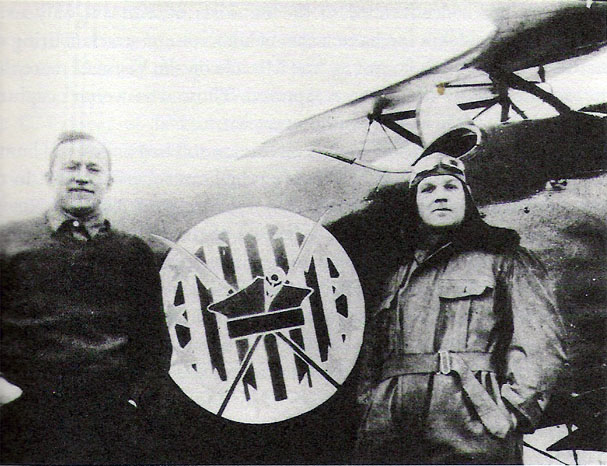
The 3rd Season of the Polish air force on 7 Founded in November 1918. They participated in the Polish-Ukrainian and on Polish-Soviet war. In the course of military reform was that in December 1918 to 7th Season of the Air Force. The end of 1919 were 21 American volunteers in this season, struggling under annd Merian C. Cooper, the 1933 King Kong turned and Cedric Fauntleroy (see photo) to the Bolsheviks. Them the renaming of the season is thanks to the now after Tadeusz Kosciuszko , a hero of the American Revolutionary War and the main protagonists of the Polish uprising of 1794 was named. 1925 was the 121st season for Squadron, but retained the addition Kosciuszko. 1939, the Kosciuszko Division participated in the defense of Poland, could, with their obsolete machines, during the Battle of Warsaw shoot 36 German aircraft, own at 8 losses. On the orders of the government, the Polish Lublin Fliegervebände moved back to first, allowing the capital are now bombarded easily without air units from the Germans. The population provided yet still fierce resistance. After the government initially to Romania fled, was also the Kosciuszko drivers were invited to eke out just to Romania. Soon had to move the government in exile based in Paris, Bucharest since picked up the defensive alliance of 1921 in favor of self-imposed neutrality. On your own now tried some Polish troops to leave Romania and to come to France because the organization of the move was difficult and grueling, but these soldiers wanted to fight, and fear not in Romanian camps of the things that were to come. The hope now lay in France: together they wanted to ward off the impending invasion of the country, thereby weakening the German Reich and decisive, at least the German End occupation of Poland. However, it was not about the morale of the French ordered too cheap, tactical mistakes favored the rapid advance of the Wehrmacht. The pilots of the Kosciuszko Division wanted to fly, but rarely received the permission of the French commander. Witold Urbanowicz, ace of the Kosciuszko squadron noted in his diary: "We do not have any friendly relations with the French officers to distance themselves from us as if we were prisoners of a hostile army.."


Division 303

forced the crew France, the Polish government in exile in London. The RAF was similar to the French first, skeptical and dismissive when it came to take up and fight with Polish pilots. The Battle of Britain, however, forced to clamp all the available forces. On 2 August 1940 was thus established in a Polish RAF Division, the 303rd Division In honor of the Kosciuszko squadron lent itself to the same suffix. With the 300th and 301 and 303 there were three other Polish divisions with a total of 151 pilots.
Polish pilots were successful at the Battle of Britain. With 12% of the total German losses, so 203 machines, was the air campaign in favor of England will be decided. A total of 900 German aircraft were France and England during the campaign and until 1945 was shot down by Polish pilots. The Division has seen 303 during the Battle of Britain 44 kills, but you can assign 30 to today kills any Division certain, it is natural to assume that between 50 and 60 German machines to the account of the 303rd . Go The success of the Kościuszko people made this quickly became heroes. Receptions, reports in the press, the use of the photo by Jan Zumbach, a pilot the 303rd, on posters that should the purchase of war bonds motivated advertised, but for defense, the Poles were, however, on the one wanted to do what they : fighting to liberate their country. Also changed the global political situation decisively with the German attack on the Soviet Union in 1941 Stalin was increasingly from enemy to friend of the Allies. More and more western allies had to deal now with the Polish question. This included, but they wanted the dictator in Moscow, not anger, silence on the 17th September 1939, silence on Katyn . The contribution of the Red Army was considered more important than the complaints of Poland, of course, demanded a full investigation of the Soviet occupation of Poland. The Kosciuszko Division continued to contribute to Allied military operations, including the Operation Jubilee , Operation Overlord , And the invasion of Germany. All operations can be viewed here . Until 27 November 1946 disbanded the Kosciuszko Division.


The Unit

The book by Olson and Cloud is characterized in detail the way the 303rd Division for the fate of the protagonists, who suffered triumphs and defeats. However, it is much more than that: Modulating the events in the larger context is classified, so that in addition to the history of the Kosciuszko-pilots of the Second World War in Europe as a whole, of course skiziiert with a focus on Poland. Here the reader learns, facts about the fate of Poland, the "betrayal" by the Ally, the participation of Polish soldiers in most battles of the war. To date in Poland is the coming together of Hitler and Stalin, and remembered the extradition of the country to Stalin by the Western Allies.
Unfortunately, there is no German translation of this treatise written in clear and compelling. It may be assumed that the German reading public would rather show little interest in the representation of a Polish division in the services of the RAF. In Canada, the United Kingdom and the United States, the book has since the publication in autumn 2003, over 100,000 copies sold in Poland, the translation became a bestseller.

Shower Curtains For Light Sage Green Walls

time for serious music

Symfonia Pieśni żałosnych - Normal Symphony of Sorrowful Songs

Wednesday, July 21, 2010

Expecting A Baby Congratulations Messages

spoils in the Middle Ages


The historian Jacob Burckhardt, as if to historical and interested in cultural and historical topoi, 1855 made his famous guide published to enjoy the art of Italy ', the' Cicerone '. His detailed observations of Rome, as if representing and interpreting, not failed to notice that the architecture the city has a phenomenon which is called the spoils. This is the reuse of ancient, old architectural elements. Burckhardt's comment this procedure fails devastating: "The use of ancient building remains, to which one has become used, also saves the following builders own thoughts (...)." [1] However, the research in this sentence do not agree to its full extent. The simplification of the work is just one of many motives that may come in Spoliennutzung in question. Specifically, the simple, pragmatic use of architectural fragments is by definition not Spoliennutzung proper.


The term 'spoils'


Before the motives of the Spoliennahme in the Middle Ages the focus of consideration occurred, must be done in a first step, the operationalization of the term 'spoils'. The origin of this word is in Latin: "In classical Latin, spolium literally meant the skin or hidestripped off an animal. In plural spolia what used figuratively to designate the violent taking of something, as, typically, the spoils of war. "[2] gives the etymological root of the word already makes a significant reference to one of the motives of spolia. A first approximation to the term may spoils as "(...) each in a new context, re-used piece of building material, regardless of whether they reworked visible or hidden, or used in its original state, and regardless of whether for practical or for any substantive reasons used was called "[3]. This general definition needs to know, however, restrictions, since such a far-reaching extension of the term also used by ancient buildings from a purely pragmatic reasons do in fact the concept of spoils would be obsolete, because just nothing special or unique could be expressed with this word. The limited designation of "ostentatious spolia" [4] in this Zusammenhag a possible solution to the dilemma presented. The designation, part 'as a generic term proposed by Alfred Herbel in its approximation to a definition of "(...) it covers but in its meaning everything that could be used in a building of ancient objects back." [5] Arnold Ash offers the following definition: "Robberies, actually, robbery pieces' are in their original use removed pieces of history, the post-antique centuries have used again: whether in spirit (the capital as capital) or not (the capital than, say, holy water basin), but in any event re-used, because the lying about antique piece is still no spoils "[6. ] The Encyclopedia of the Middle Ages noted that to distinguish, for Spoliennutzung "(...) is [] between a purely utilitarian re-use as construction material for which there is evidence at all times, and enhanced aesthetics. stamped, come in the shape and decoration of the primary spoils at the new Versatzort advantage. "[7] The approximation of the concept is hereby be completed. It became clear that it is spoils to ancient architectural elements that have been deliberately used in the Middle Ages. The motivation of the use was more than the pragmatic thinking, which wanted to achieve facilitation of the work: "In Robberies it's always a question that they be presented as an antique (or at least, beautiful ') pieces that they were not on the mere material value reduced. "[8]


spoils in Late Antiquity


Even if its primarily spoils in the Middle Ages is, a quick look at the late antiquity is essential, as the reuse of older chocks, not only as a simple building, but also as conscious use with mostly symbolic content was of course not only in the epoch of the Middle Ages custom: "The beginnings of Spoliennahme back to the rich Greek and Roman classical music in the republic. Not only the Athenian city wall has been enlarged several times with spoils and strengthened, and the Acropolis were familiar with such operations, but the column drums and re-used other pieces of the previous building in the Periclean Parthenon as components of the foundation and retaining walls. A similar process is Byzantine known. "[9] The time that we call the ancient world, also knew the robbery of spoils of war booty, as it incorporates the original meaning of the term spolium , this could surely not the winning party only to its own triumph to make it clear. In addition, with the theft of important enemy of art objects or components are illustrated symbolically in some cases, the claim to the realm of the losing party. This desire was also articulated by To illustrate the Spoliierung not only to its own victory, and thus the defeat of the enemy and his subjects, but also a continuum in terms of a continuation of power symbolically represent, so were that the new authorities on foreign territory immediately confronted as aggressors hostile mood. In some cases, gave "(...) the formula, ex aere capto ', ie, from captured ore' (...) many ancient work of art, such as the famous Colossus of Rhodes, a special additional meaning." It is interesting [10]

the question of how antiquity was perceived. Already in late antiquity there were in Rome, in response to the massive removal 'Older' buildings, the initial impetus of the Government in the form of decrees, which in the modern sense of the term, and heritage 'would run: "was the trigger for the corresponding decrees of the early and middle imperial period to protect the city image as the one of Alexander Severus expressed edict of Vespasian (Just Cod VIII, 10.2) clearly shows what is recorded that the demolition of entire buildings, the streets not being undermined. "[11] Other laws for the protection of ancient buildings (as the pagan cult buildings had to content ) followed. In addition to aesthetic reasons, however, a clear motive, which is also in the Middle Ages Use should be found and prosecuted by an authority is ". Preservation and maintenance of old buildings is therefore serve their own claim to power and its own legitimation" [12] Nevertheless, could the removal of old buildings to chocks and might win some spoils do not stop be. Even the attempted protection of the increasingly pagan and therefore anti-respected temple was not completely: "The hundred-year struggle of the public authority itself to protect the pagan monuments, temples, concludes with the legalization of Spoliennahme in 458 well-preserved buildings, Temples are also to protect further need of repair . Repaired to put to stop but dilapidated buildings "[13] had this pointed out an interesting difference between the Western Roman and Eastern Roman Empire," While we in the West 364 the temple on the land protected as a building, 399 east, just in the country, causing her to cancel without riots, without attracting attention, is recommended. "[14] In both these powers thus preserving old buildings, hardly the full extent possible. In addition, the East saw the destruction of pagan buildings is a clear sign of the victory of Christianity. [15]

One of the best known examples of Spoils is now dated to the Late Antiquity. Is this to be the works on behalf of the Roman senate, 312-315 built Arch of Constantine, the chocks were older. However, this was not primarily from artisanal shortcomings The triumphal arch combined both architectural elements that have been incorporated for pragmatic reasons, as well as consciously chosen insignia of imperial power, removed from monuments of former emperor, what an honor and clarification of a power continuum, not only equality but also should be a predominant position of Constantine. [16] It had the Senate "(...) be certain that in the Eyes not only of the Emperor, but also the people, the extensive reuse of relief and parts not represented a reduction of the ceremony, the equity 'build the monument would not be considered down-reducing than its value. "[17] The study of visible antiquity, the perception of old buildings that bore witness to size, is tangible not only in Late Antiquity. Protection and destruction of these went hand in hand. It may already be stated here that the removal of old buildings was conducted in late antiquity entirely for pragmatic reasons, but it is more than conceivable that even an aesthetic component in the selection of the Available chocks had played a role. The next point is now to be discussed Spoliennahme motives of which were in part also for the importance of Late Antiquity.


motives


certainly is it correct to assert that a strong population increase between 11 and 13 Century Europe and recognized by the increased demand for building materials, including by the removal , reproduction or re-use of ancient buildings has been satisfied [18], but was already here an attempt to give the Spoliennahme a deeper meaning than that of merely pragmatic use as building material. The "(...) image of a disdain for the spoils and a new carefree or superior to deal with them shows their use as architectural sculpture." [19] This can too easily to know to be, also should elusive motives Spoliennutzung which sometimes clear, from time to time, but as constructed by posterity, take a close look in order to capture the phenomenon completely.

case of more intensive examination the tangible or interpretation constructed motifs, it is clear almost superfluous, that first the availability of antiquity, the mere existence of old abandoned construction sites, columns, reliefs and statues has the further use allows this (the spoils was about flat, it was rather handsome, had straight edges, so they used it up "[20]) -. this banal observation is, however, be extended by a crucial component in order to understand a basic principle of Spoliennahme on the pragmatic use than simply building out in the middle ages, which further each time consideration to serve as a prerequisite: the medieval man, artist, Builder or just plain farmer found the antique buildings, all reservations, which can the foreign and unknown to arouse the people, as beautiful to the eye, well-pleasing, they rated the apparent antiquity, of course, within certain limits, as their own standards more to be fair. Architectural elements such as columns or decorative works of ancient walls have been incorporated into their own buildings. Of course, should this case be noted that a Spoliennahme could take place even under the almost complete obliteration of their ancient piece, which will reduce the previously identified but not, it was but in most cases simple chocks as rectangular, it consciously as Material used for processing (why you should difficulty an appropriate blocks detach first from the quarry and construction site transport when an already pre-worked stone was encountered in the immediate vicinity?) And are thus more likely under the category of pragmatic use of ancient times as building material can . could apply It should be noted, however, that critical conditions, to understand the 'spoils,' as it is here used to be able to apply, well, the square if its glory and in another, in the Baufunktion Ausgangsbau not necessarily use the needed. [21] Furthermore, the simple cube could according to some sources, to arouse admiration "(...) Because even the naming Lapis quadratus says in the medieval sources, more than just the straight edges, more than the mere availability - simply as a respectable" Box "is one, in the absence of other criteria, yet sufficiently where needed today identify more ancient stone in medieval walls can. "[22] Certainly processed already worked chocks to fit in the new context (such as a church), the basic idea of \u200b\u200breuse of antique pieces is doing from an aesthetic point of view this does not detract.

Another group of spoils, in the context of, defacing ' should be mentioned that the clear as pagan and therefore the Christian faith opposed to standing architectural elements which, if they were in the course of interpretatio christiana not the Christian environment is not as established hostile is destroyed deliberately, were abused in a figurative sense to to symbolize the triumph of Christianity. The 'slavery' of paganism in the foundation or the deliberately wrong way old - and therefore perceived as pagan - inscriptions are mentioned here only for completeness. Trier offers an excellent example of this practice, since before the church of St. Matthias is an ancient Venus statue was hung. This pilgrims pelted with stones, so as to give expression to their contempt for paganism. [23] The spoils symbolized in this context, therefore, not just the survival of antiquity, but to the contrary, its end, her death [24].

One difficulty has be addressed at this point: "If we keep to the contemporary sources, the result is the finding that constant in this is only the aesthetic qualities of the speech - from the superb, the value and the rarity of the materials, also possibly from their trans or trans-alpine marine origin, from Rome and Ravenna, and the effort that has made its procurement. "[25] This is often the case that the specific motives of the Spoliennahme be constructed from a chain of reasoning, just because the available sources do not give exact information. The supposed motivation for the use of spoils is thus "(...) is already the result of an interpretation, the result - as might be expected - the question the direction of the interpretative and the desire to verify a particular hypothesis is conditional." [26 ] This is quite problematic in some cases, but also necessary. A Spoliennahme, which went under great difficulty and with an enormous financial burden of pay had to find a justification, this is likely just for today apply as for the middle age. Not infrequently, only the reference ranges on the beauty, the aesthetic impact of the spoils, but many a Spoliennahme was chosen so aware that not also the author of the medieval chronicles an explicit reference to the semantic content may have been seen as necessary, modern research is therefore confronted with the question of how the reception of spoils in the Middle Ages was what the medieval viewer appeared to be known and thoughtfully and to what extent, in addition to the educated classes, the common man the symbolism of understanding - or fascinated only by the beauty of ancient chocks was. It is likely that the symbolism of those who should understand it, was understood. These questions can hardly be answered, but they should be in considering the motives that would justify the use of spoils, certainly respected.


perception of antiquity in the Middle Ages


The question of the perception of antiquity, the of the past generally can not be answered satisfactorily. Be careful to diagnose the following: "The medieval history of consciousness was a past-oriented contemporary consciousness. The medieval historian looks that is not value-free, but returned with very specific, time-related interests in the past. "[27] Of course, the historical consciousness always has a contemporary relevance, as the writing of history is by no means and value-free at any time, so this statement is general and not specific to the Middle Ages! The Middle Ages is characterized by a still from one dominated by the Christian religion, past events, which thus represents the pagan heritage as disparate to the new reality: "All that stood in connection with paganism, was regarded as demonic and unclean, It might only be sacred or profane things. With anxious fear, therefore, were the remains of pagan settlements, the ruins of castles and houses considered and rejected as the seat of the devil. "[28] The presence of such a view in all walks of life can the Middle Ages are found, it was not the fear of the unknown , then hit the feeling of superiority of the pagan past, especially in educated circles. [29] The demonization of ancient buildings was thus a reflex reaction. However, it should be noted that such a strict view was not always and everywhere been noted, but the Italian landscape rich in ancient, pagan Buildings that were not necessarily regarded by contemporaries as a strange, they were traditionally part of their everyday lives and even more raw material suppliers as prohibited places of evil, even if the increasing influence of Christianity in this context are of course considered as well. A rich in ancient buildings city like Rome could, for example, driving at all times a real export coveted chocks, resulting in even developed a separate industry. [30] If this was still favored already in late antiquity by the relocation of the administrative center to Constantinople. When looking closely at the motives Spoliennutzung is thus often a case of dependence determined, whether a certain rapprochement of religion was made to ancient spoils, or whether this has been pushed into the background to let other motives prevail.


spoils as a trophy


In considering the motives of the Spoliennutzung will try to give the first point, the the original meaning is closest to be considered. Here the subject is clear from the fact: a victory won, mostly resulting from a aggressive military action was set a worthy characters, so that the triumph was not only comprehensible for those directly in the battlefield events involved, but also for the subjects of the victorious and defeated power, as also was the victory is manifested in the hive, this was for the following generations and thus it was aimed to symbolize fame, prestige and authority. At the same time experienced a decrease in the defeated power, which by the loss of important chocks, caused, for example, from its own metropolitan area. Also, the spoils could show as a trophy to overcome a general order and / or a ruler. Outstanding examples provide various Italian cities, viewing after victorious battles served as inflationary on foreign ownership to those chocks triumphantly to present in their city. For Venice is even a tradition, architectural elements to import from other locations to speak, [31] This was part of the spoils were hauled in raids. - This obviously does not mean that all the spoils were captured, purchase, ie, import 'from ancient was this post-ancient city a popular means to thereby symbolizing the idea of \u200b\u200bexistence, duration, and vestutas auctoritas (these aspects are subject below A closer look). From the wealth of examples are only a few are mentioned. is important in connection with the spoils as a trophy the following: ". To be both ornamental and spolia , however, artworks had to preserve the memory of their capture" [32]

If you stay still for a moment at the Venetian examples , it is striking that the Church of San Marino is riddled with spoils, "640 (...) counted capitals can be regarded 300 as spoils, namely 15 as ancient and late ancient, 265 as the Eastern Roman, Late Antique and 20 as Byzantine." 33 [ ] is important to note that medieval imitations of Spolienkapitellen also included in the figures, because it is believed that these medieval works were made to replace decayed or damaged capitals, so they may copy, thus representing pseudo foreman. It is true that, of those 300 each spoils not explicitly obtained as a symbol of conflict has been integrated into the church. Now the message conveyed by any spoils in San Marino is not a trophy primary, it may be assumed that that was just installed Baustück for aesthetic reasons. What is striking is the large number of Byzantine spoils. Those captured were demonstrated by Venetian crusaders 1204 in Constantinople [34]. Thus, the primary motive of the trophy is tangible, which, like so many times to that of aesthetics - in no case would be inelegant process capitals in a church, only with the thought of the presentation of a victory - has been extended. Venice also has to ask much more spoils, as is apparent at first glance, since before the city, in the sea, which sank one or the other ship, laden with trophies.

Venice Has been cited as an example, it is also the long bitter enemy of this city-state, Genoa, are mentioned. In Genoa is a stolen season sarcophagus, and this is a rare case ". iste angelus captus fuit in civitate gulfo Venetiarium in Scurzelo " the viewer in the inscription betrays his origins are shown nine figures, can be identified in the middle of a woman, which is thus referred to in the inscription angel that with security in the wake of a interpretatio christiana has just made such a one. Dropped was the relic of the Croatian mainland offshore seaside town of Korcula, and that reveals how a second inscription in by the Genoese admiral Lamba Doria 1298 This trophy in honor of the victory over the Venetian fleet was built into the facade of the family church of San Matteo in Genoa, thus served the glorious Admiral as a tomb. Genoa is interesting for the fact that the many spoils, especially in the 12th Century were presented frequently in the city, largely to be found in religious buildings were [35].


spoils as symbols of power


already raised the issue of power through communication spoils should be here now running further spoils had been achieved not only by robbery as a trophy: "Finally, with spoils Policy institutions, religious and secular, which is in the Middle Ages can not be separated often. "[36] Nevertheless, to here, serving more clarity, an attempt will be made between secular and religious entities of Spoliennahme differ, even if the motives are this often overlap.

General should be noted at this point that the use of mostly antique chocks had already political capacity, we also considered the client. The ancient Baustück was used as a symbol to express size, fame, or a continuum - as it could a trophy, with the only difference is that a Robbery was not needed. The purchase of an antique piece was much more widespread, often were transported under these pieces of work and not without risk over long distances to their destination. It was the cost considerably, "Transport costs were not only wages and for the transport such as cars and ships, but also of customs obligations, which could be up to 20% of product value." [37]


spoils and temporal power


are unfortunately has to be said that in dealing with spoils, which were used as a sign and symbol as a political statement, the political implications may not be read out directly from existing written sources. Therefore, it is necessary to take a closer look at the social and / or political circumstances that form the framework for a politically motivated Spoliennahme. Therefore, the argument in such cases is well supported as an interpretation and thus to be regarded as negotiable standing.

Charlemagne influenced posterity in many ways, his biography and deeds were contemplative has always been subject Interpretations. Also in connection with the use of spoils as symbols of power of these rulers can deliver an outstanding example, which is manifested in Aachen. Aachen, deliberately chosen as the center of power of Charles that "the staging of political power" [38] was used, should also present his political vision, which was done, including through the use of spoils (and also of pseudo-polishing). It could be assumed that Karl admire during his stays in Italy not only the impressive architecture, but also observe the common practice of Spoliennahme: "It almost seems as the mid-8th Century, the rulers of the various duchies Italy will compete in a political contest, but was played on a cultural level. "[39] It could also result in the conviction that manifest references to tradition in buildings through the use of spoils. For the Palatine Chapel in Aachen were procured including specially marble columns from Rome and Ravenna, and the idea that this was only done because, as the Hofbiograph Charles, Einhard wrote that nowhere else such columns could be brought [40] is difficult because in addition to the circumstances of the transport, the costs were not negligible. Rather, it is conceivable that "(...) any further statements in this regard as nigh tautological (...) "[41] were considered, would the resulting message of the cover to antiquity, to the glory of the Roman imperial rule, Roma secunda have been clear even under circumstances of equality between Aachen and Rome in terms of a new Rome / . be the list of columns with such important provenance must therefore regarded as "a conscious document legitimate successor body and its claims to it." [42] This was facilitated by the political quarrels of Pope Leo III. with the urban Roman nobility, which have even led the Pope to flee Rome in this position helped Charles Pope and thus secured the imperial crown [43]. Also presented for the papacy is no circumcision is its own authority, if Charles Town Roman spoils, as well as pieces from Ravenna - after all, both under the rule of the papacy in - you requested, were but so also church demands met, "(...) served to the . superpowers of Christian Rome to the barbarian multiethnic country beyond the Alps to bear in mind "[44] The amount of Aachen spoils - there are only noted briefly that even the architecture was the Palatine Chapel South Alpine models - thus served as an illustration of the equality with the ancient models, as well as by gaining representation to an awareness of participating in ancient, glorious past, which should now be continued as glorious. [45]

Similar reminiscences also apply to the ruling family of the Ottos, who present in the Magdeburg Cathedral spoils South Alpine home to probably the idea of \u200b\u200ba "Roma nova '[46] represent. However, this should include the religious component of the Magdeburg spoils are observed, which were used in the first church building as a container for holy relics.

Another example dates from the late Middle Ages. The bridge head of Capua, built by order of Frederick II of Swabia, but as an example to be treated with caution: although ancient relation and thus immanent statements about the noble self-concept of the ruler will not be more in doubt is to use pure 'spoils, so real items used in ancient times, controversial in this building: "It is more likely that the bridge gate of Capua no spoils were used. "[47] Thus, it is conceivable that instead copies in the tradition of ancient chocks and sculptures were installed at the bridge button. It will be assumed here that both ancient spoils and copies of these were used, and the copies should just give the impression of antiquity as well as those who might want to wake spoils used - thus Both assumptions lead to the conclusions that explain the reason for the ancient reference. The bridgehead was probably built 1234-1240, but went through over the years various changes and redesigns. The exact design in the early years but is now almost entirely reconstructed according to written sources. The evident antiquity reference clarified the claim to power of Frederick II, who during his term of office was in conflict with the Roman papacy. Dispensing with Christian themes was not only the allusion to the pre-Christian Roman Empire, it is "(...) the majestic, awe-inspiring figure of Frederick the state and its legal system, with which the Iustitia enthroned emperor, he even source and guarantor of justice (...). A building quite profane in function and iconography, sacred only insofar as the secular state where religious dignity. "[48]


spoils and ecclesiastical power


similarities in the preparation of the spoils by church authorities with those motives are obvious secular ruler. However, can at first to view the reference to a surprising continuity of power in the church context, is the Christian worldview in the early Middle Ages, rather, recent 'date was. This is not the case with the symbolic representation of worldly power, but was treated like the pagan element secondary. Therefore, in Spolienverwertung be observed by church authority that tradition, as it could be symbolized by spoils, was viewed in a new context: "This radical inclusion of memories of the past, now in an obligatory topical dimension in the present, was determined by a frame in which the history of salvation, and therefore the contrast pagan-Christian, was dominant. "[49] Legitimacy problems should therefore be obsolete, the reference to tradition and respectability but a cornerstone for the advance of a nine-value system, which claims to totality. May serve as an example of the use of porphyry by the Roman bishops. That precious material was destined for the Roman Emperor, was the aesthetic appearance of porphyry but more than adequate to represent stately dignity. The use of late antique porphyry was both secular and ecclesiastical side for the very reasons mentioned above - tradition and claim to power - instead of "not exposing princely attributes to itself, but the have been queuing in the tradition of Constantine seems the main driver of the Bishops of Rome to be. "In addition [50] found that porphyry material since the conquest of the mining areas in Egypt in the 7th Century by the Arabs in demand and scarce building materials, thus spoils par excellence. [51]

The design of churches with spoils was detectable by written sources, the reasons for this are often not clear, since almost continuously only on the Beauty is made. Unison is drawn to the trouble of Spolienbesorgung which had been necessary, as no such architectural elements were found in close proximity. The important monastery of Cluny was for example, by Abbot Odilo of Cluny architectural changes and among other ancient pillars decorated, which were, as the corresponding source noted, brought from the remotest provinces of the raging rivers of the Durand and Rhône with great difficulty. [52] Now is a deeper reason hidden from view, except the assumption that every effort is worth the praise of God. Clearly this is still in the description of the new building of the monastery Saint Germain d 'Auxerre by Graf Conrad von Argovia. The corresponding source image and describes vividly the procurement of columns for the Church, because the quantity of marble on the ground was not sufficient. [53] The Chronicle of the Benedictine Saint-Hubert in the Ardennes, mentioned the purchase of spoils by Abbot Theodoric - columns of Arles for the cloister -. Without a deeper reason to call this [54] If one considers, however, the CV of the abbot, one can in his trip to Rome a source of inspiration for the Obtaining see spoils. The interspersed with spoils of Italian church architecture was probably an amazing experience for the abbot, who, there was also the purchase of spoils from Italy too costly, in Arles find one. [55]

The use of spoils is in smaller, simple Churches have been practiced. Along the Roman roads such as Roman milestones have been rebuilt and VER. Thus the institution of a wash basin in the cloister of the Cistercian abbey at Terracina Fossanova the 54th . Milestone of the Via Appia [56] The re-use of particular milestones in sacred buildings is striking, reasons must be next to the frequent occurrence that very stones and rewarding form which could be implemented and continued to work with little trouble. Whether the same time symbolizes a reference to the imperial power, what authority or a transfer was in a Christian context, the motivation for the use, is not exactly noticeable - as with many spoils, which were used in religious buildings is the case, since it is difficult is "(...) identify whether behind a dedicated interpretatio christiana was, or whether the spoils only in a general sense as treasures were - the stone jewelry of some medieval book covers similar -. that have been presented for its own sake "[57]

Another possible interpretation, the acquisition of pagan gods and renaming or re-interpretation of this as part of a interpretatio christiana . That interpretation was a guarantee for the survival of antique statues, such as the Tomb of Cardinal Guillaume de Braye shows in Orvieto. The sculptor Arnolfo di Cambio created for the grave of the late Cardinal in 1282 a statue of Mary with child, but he used a pre-made Statue of the heathen, which represented Fortuna or Tyche, and extended this to the Christ Child [58]


Conclusion. Spoils in the Middle Ages


The use of spoils in the Middle Ages is a fact, provable by numerous examples, the motifs are often not clearly evident from existing sources, so you need help at times with an interpretation and design chain. Strictly scientifically this is a risky game, because the line between fantasy and a flowering of demonstrable argument occasionally narrower. Uncontroversial is that spoils serve as proof of any kind of antiquity, as well as continuing to live this as a testament to the contemporary discussion of the legacy of the past. From the simple admiration of the old buildings and parts to sophisticated political statement, the range of explanations. The most notable effort in obtaining spoils shows the importance of antiquity, which had taken place at all levels rather negligent handling of her, at the present time not considered with the same intensity could, since spoils a decisive contribution to the survival of ancient taken place. It is striking that in the middle of the 13th Century Spoliennutzung decreases greatly. The main reason for this may well be banal sort: antiquity was not so abundant, decay and degradation, looting and Spoliennutzung considerably reduced the stock of antiquity. Also, especially for the church architecture is a significant change has occurred: the Romanesque church spoils were often represented, and used deliberately. By the advance of Gothic architecture spoils, however, were as confounding factors precluded the desired representation of the 'heavenly Jerusalem', the thoughtful composition with the aim of the presentation of beauty, harmony. Nevertheless, the Spoliennutzung we owe that antique pieces and are still identifiable today. Had they not used, it is easy to imagine that these same would not have survived the centuries.

----

[1] Burckhardt, Jacob: The Cicerone. A Guide to the enjoyment of art in Italy, Stuttgart 1964, p. 77

[2] Fabricius Hansen, Maria: The Eloquence of Appropriation. Prolegomena To An Understanding of spolia in Early Christian Rome, Rome 2003, p. 14

[3] Raff, Thomas: spoils - building materials, or meaning, in: Daedalus 58, 1995, p. 65 f.

[4] Ibid, p. 66.

[5] Herbel, Alfred: The use of ancient spoils in the sacred buildings of Provence, Ludwigshafen am Rhein, 1988, p, 2

[6] Esch, Arnold: On the reuse of ancient chocks and sculptures in medieval Italy, in: Journal of Art History, vol 51, 1969, p. 3

[7] Jaeger, M.: 'spoils', in Encyclopedia of the Middle Ages , 10 vols (Stuttgart: Metzler, [1977] -1999), 7, cols 2129-2131, in Brepolis Medieval Encyclopaedias - Encyclopedia of the Middle Ages Online

[8] Esch, Arnold: Frederick II and the Antiquity, in: Esch, Arnold; Kamp, Norbert (ed.): Friedrich II Meeting of the German Historical Institute in Rome in the commemorative year 1994, Tübingen 1996, p. 222 .

[9] Herbel, Alfred: The use of ancient spoils in the sacred buildings of Provence, supra, p. 3

[10] Raff, Thomas: spoils, supra, p. 66

[11] Meier, Hans-Rudolf: Old Temple - new cults. To protect obsolete churches in late antiquity and the adaptation of old buildings in the Christian cult, in: Brenk, Beat: Innovation in Late Antiquity. 6th Symposium Basel and 7 May 1994, Wiesbaden 1996th S. 365th

[12] Geyer, Angelika: "Ne ruinis urbs deformetur ..." aesthetic criteria in the late Roman law, in: Boreas 16, 1993, p. 65

[13] Deichmann, Peace-Wilhelm: column and order in the early Christian architecture in: releases of the German Archaeological Institute, Rome Division, vol 55, 1940, p. 115

[14] Deichmann, Peace-Wilhelm: The spoils in the late ancient architecture, Munich 1975, p. 96

[15] See, Deichmann, Peace-Wilhelm: column and order, ibid, p. 116

[16] See Raff, Thomas: spoils; ibid, p. 68

[17] Deichmann, Peace-Wilhelm: The spoils, op cit, p. 8

[18] Esch, Arnold: Reuse of antiquity in the Middle Ages, Berlin, New York 2005, p. 50

[19] Hamann-Mac Lean, Richard HL: Studies in the ancient art of the Middle Ages, in: Marburger Jahrbuch for Art Research 15, 1949 / 50, p. 168

[20] Esch, Arnold: To reuse, supra, p. 42 ..

[21] Ibid, p. 5 f.

[22] Ibid, p. 43 f.

[23] See Clemens, Lukas Tempore Romanorum constructa. to capitalize on and Perception of ancient ruins north of the Alps during the Middle Ages, Stuttgart 2003, p. 244

[24] See Esch, Arnold: Wider use, cited above, p. 34

[25] Poeschke, Joachim: Architecture and Aesthetics in the 13th Spolienintegration Century, trans. (Ed.): Ancient spoils in the architecture of the Middle Ages and the Renaissance, Munich 1996, p. 225

[26] Weigel, Thomas: Robberies and colored marble in the opinion of medieval authors, in: Poeschke, Joachim (ed.): Ancient spoils in the architecture of the Middle Ages and the Renaissance, Munich 1996, p. 118

[27] Goetz, Hans-Werner: The Presence of the Past in the early and high medieval historical consciousness, in: Historical Journal, vol 255, 1992, p. 72

[28] Franz, Adolph: The church benedictions in the Middle Ages, Volume 1, Graz 1960, p. 623rd

[29] See Clemens, Lukas Tempore, supra, p. 269

[30] See Esch, Arnold: To reuse, supra, p. 29

[31] See Kramer, Joachim: The origin of the Spolienkapitelle, in: Deichmann, Friedrich-Wilhelm (ed.): Corpus of the Church of San Marino, Venice, Wiesbaden 1981, p. 7

[32] Kinney, Dale: spolia. Damnatio and Renovatio memoriae, in: Memoirs of the American Academy in Rome, Vol 42, 1997, p. 120

[33] Kramer, Joachim: The Origin, ibid, p. 1

[34] See ibid

[35] See: Smith, Rebecca: spoils and trophies in medieval Genoa: sic hostes Ianua frangit, Weimer 2002, p. 21

[36] Westermann Angerhausen Hiltrud: Robberies and environment in Egberts Trier, in: Journal of Art History 50, 1987, p. 306

[37] Binding, Günther: Construction in the Middle Ages Darmstadt 1993, p. 363

[38] Jacobsen, Werner: stately building in the Carolingian period. Carolingian palaces from ancient Germanic tradition and reception, in: Stieg man, Christoph; Wemhoff, Matthias (ed.): 799 - Arts and Culture of the Carolingian period. Charlemagne and Pope Leo III. in Paderborn, Mainz, 1999, p. 93

[39] Mitchel, John Charles the Great, Rome and the legacy of the Lombards, in: Stieg man, Christoph; Wemhoff, Matthias (ed.): 799 - Arts and Culture of the Carolingian period. Charlemagne and Pope Leo III. in Paderborn, Mainz, 1999, p. 101

[40] See Einhardi vita Karoli Magni, MGH SS rer. Germanic, c. 26, p. 31

[41] Weigel, Thomas: Robberies and colored marble in the opinion of medieval authors, in: Poeschke, Joachim (ed.): Ancient spoils in the architecture of the Middle Ages and the Renaissance, Munich 1996, p. 123

[42] Hamann-Mac Lean: studies in the ancient art of the Middle Ages, in: Marburger Jahrbuch for Art Research, vol 15, 1949 / 50, p. 162

[43] See: Herbers, Klaus: The pontificate of Pope Leo III. (785-816), in: Stieg man, Christoph; Wemhoff, Matthias (ed.): 799 - Arts and Culture of the Carolingian period. Charlemagne and Pope Leo III. in Paderborn, Mainz, 1999, p. 13-18.

[44] Gramaccini, Norberto: Mirabilia. The afterlife of ancient statues in front of the Renaissance, Mainz 1996, p. 52

[45] See Effenberger, Arne: The reuse of Roman, Late Antique and Byzantine art in the Carolingian period, in: Stieg man, Christoph; Wemhoff, Matthias (ed.): 799 - Arts and Culture of the Carolingian period. Charlemagne and Pope Leo III. in Paderborn, Mainz, 1999, p. 650th

[46] See: Clemens, Lukas: Tempore, supra, p. 274

[47] Esch, Arnold: Frederick II, supra, p. 210

[48] Ibid., P. 208

[49] Setti, Salvatore: From auctoritas, ibid., p. 158

[50] De Blaauw, Sible: Pope and purple. porphyry in the early church interiors in Rome, in: That man, Ernst (ed.): Tesserae. Festschrift für Josef Engemann. Yearbook of Antiquity and Christianity, Supplement 18, 1991, p. 48

[51] See Esch, Arnold: reuse, op cit, p. 51

[52] See Vita Sancti Odilonis, auctore Jotsaldo Sylviniacensis. D Migne, PL CXLII, col. 908; reprinted in: Braunfels, Wolfgang, Monastery of Western architecture, Cologne 1962, p. 292 f.

[53] V gl Heiric of Auxerre: Miraculasancti Germani II, 6, MGH SS 13, p. 402 f.

[54] See Chronicon sancti Huberti Andaginensis 19 (27), MGH SS 8, p. 579th

[55] See Clemens, Lukas Tempore, supra, p. 299

[56] See Esch, Arnold: A long-lost milestone of the Via Appia. Other criteria of the provenance of spoils in medieval churches in Italy, in: Epigraphica, Vol 25, 1973, p. 96-101.

[57] Gramaccini, Norberto: Mirabilia, a.a.O., S. 65.

[58] Vgl. Esch, Arnold: Wiederverwendung, a.a.O., S. 46.