
London, June 1946: The Kingdom is celebrating the end of the war and the victory over the Axis powers. A parade, thousands of excited people praise the soldiers marching from all corners of the world, all under the satisfied look of his Majesty King George VI. Only one man can not share the enthusiasm really:
standing along the parade route that day was a tall, slender, fair-haired man with the name of Witold Urbanowicz difficult. As he watched the Hurricane flash by overhead, a flood of memories returned to him. He had been up there in a Hurricane during the Battle of Britain. He had gazed down on this city when it was blazing with fire. His squadron had become a legend of the battle. On the first day of the London Blitz - Hitler's attempt to bomb the British civilian population into submission -- Urbanowicz's squadron was credited with shooting down no fewer than fourteen German aircraft, a Royal Air Force record.
Setting records had already become a habit for 303 Squadron -- or the "Kościuszko Squadron," as it was also known. In its first seven days of combat, the squadron destroyed nearly forty enemy planes. By the Battle of Britain's end, it was credited with downing more German air craft than any other squadron attached to the RAF. Nine of its pilots, including Urbanowicz, were formally designated as aces. Writing in Collier's three years after the battle, an American fighter pilot described 303 as "the best sky fighters I saw anywhere."
Yet, despite its accomplishments in the war, none Of 303's Pilots took part in the fly-past. None marched in the parade. For they were all Polish -- and Poles who had fought under British command were deliberately and specifically barred from the celebration by the British government, for fear of offending Joseph Stalin. A week earlier, ten members of Parliament had written a letter of protest against the exclusion. "Ethiopians will be there," the letter declared. "Mexicans will be there. The Fiji Medical Corps, the Labuan Police and the Seychelles Pioneer Corps will [march] -- and rightly, too. But the Poles will not be there. Have we lost not only our sense of perspective, but our sense of gratitude as well?"
Pferde gegen Panzer?
Almost seven years earlier with the attack of the Third Reich to Poland started the Second World War. Despite assistance obligations would "die for Danzig" neither French nor English. The massive superiority of the German Army Poland swiftly forced to their knees. At defiant resistance are not lacking: the Westerplatte was defended by Major Henryk Sucharsk bitter seven days, three days provided Captain Raginis at a ratio of 40:1 resistance until he finally, with a hand grenade in his and the lives of three German soldiers, an end prepared. Until 28 Warsaw capitulated September, the battle for the island Hela took about a month. Major Henryk "Hubal" Dobrzański decided with his first 50 soldiers for the guerrilla struggle. He put it up to each officer if they wanted to participate. Hubal defied the instructions of the (first in Romania) who have fled government, which rightly feared
 retaliation by the Germans. With 620 000 soldiers, 4,700 tanks and 3,200 combat aircraft began the invasion of the Red Army. From both sides of Poland was again pressed, the old image of the Russians and Germans unite against the Poles, deeply rooted in Geschichtsbewußstein has been repeatedly confirmed. to celebrate in Brest-Litovsk Wehrmacht and Red Army staged a parade to the common victory.
 Two Myths are widespread today and have persisted in mind: first, that the Polish air force was completely destroyed within 24 hours, second, that the Polish cavalry fought on horseback against German tanks. Both are sent spread propaganda lies of the German Reich. By no means was it the Wehrmacht, first to destroy the Polish pilots in full, but the aircraft were before 1 September placed scattered in small, unknown airfields, so that as many as 126 German aircraft shot down and many were damaged. At the beginning of the blitz, there was in fact to vereinzelnten clash of tanks and cavalry, this however, resulted in the lack of information on the Polish side, by no means wanted to be suicidal to impale with a drawn sword steel tiger. Now, the legend of the Lancers, the anreitet against tanks, distributed on the first day of the raid: Two Polish cavalry divisions attacked an infantry division from the Germans during the fight reached armored vehicles of the Armed Forces into battle and were about 20 riders (and horses) . kill The next day, the German foreign correspondents led to the battlefield, they showed the mangled riders and horses and noted triumphantly that this is typical for the Polish army defeated was. This myth spread rapidly around the world, as intended by the German side.
The forgotten heroes
The 3rd Season of the Polish air force on 7 Founded in November 1918. They participated in the Polish-Ukrainian and on Polish-Soviet war. In the course of military reform was that in December 1918 to 7th Season of the Air Force. The end of 1919 were 21
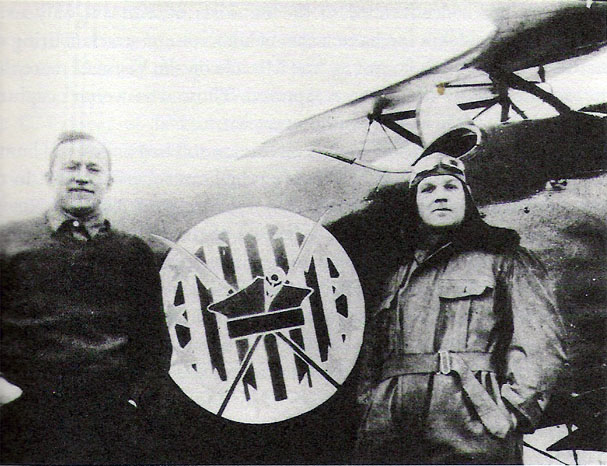 American volunteers in this season, struggling under annd Merian C. Cooper, the 1933 King Kong turned and Cedric Fauntleroy (see photo) to the Bolsheviks. Them the renaming of the season is thanks to the now after Tadeusz Kosciuszko , a hero of the American Revolutionary War and the main protagonists of the Polish uprising of 1794 was named. 1925 was the 121st season for Squadron, but retained the addition Kosciuszko. 1939, the Kosciuszko Division participated in the defense of Poland, could, with their obsolete machines, during the Battle of Warsaw shoot 36 German aircraft, own at 8 losses. On the orders of the government, the Polish Lublin Fliegervebände moved back to first, allowing the capital are now bombarded easily without air units from the Germans. The population provided yet still fierce resistance. After the government initially to Romania fled, was also the Kosciuszko drivers were invited to eke out just to Romania. Soon had to move the government in exile based in Paris, Bucharest since picked up the defensive alliance of 1921 in favor of self-imposed neutrality. On your own now tried some Polish troops to leave Romania and to come to France because the organization of the move was difficult and grueling, but these soldiers wanted to fight, and fear not in Romanian camps of the things that were to come. The hope now lay in France: together they wanted to ward off the impending invasion of the country, thereby weakening the German Reich and decisive, at least the German End occupation of Poland. However, it was not about the morale of the French ordered too cheap, tactical mistakes favored the rapid advance of the Wehrmacht. The pilots of the Kosciuszko Division wanted to fly, but rarely received the permission of the French commander. Witold Urbanowicz, ace of the Kosciuszko squadron noted in his diary: "We do not have any friendly relations with the French officers to distance themselves from us as if we were prisoners of a hostile army.."
 Division 303
forced the crew France, the Polish government in exile in London. The RAF was similar to the French first, skeptical and dismissive when it came to take up and fight with Polish pilots. The Battle of Britain, however, forced to clamp all the available forces. On 2 August 1940 was thus established in a Polish RAF Division, the 303rd Division In honor of the Kosciuszko squadron lent itself to the same suffix. With the 300th and 301 and 303 there were three other Polish divisions with a total of 151 pilots.
 Polish pilots were successful at the Battle of Britain. With 12% of the total German losses, so 203 machines, was the air campaign in favor of England will be decided. A total of 900 German aircraft were France and England during the campaign and until 1945 was shot down by Polish pilots. The Division has seen 303 during the Battle of Britain 44 kills, but you can assign 30 to today kills any Division certain, it is natural to assume that between 50 and 60 German machines to the account of the 303rd . Go The success of the Kościuszko people made this quickly became heroes. Receptions, reports in the press, the use of the photo by Jan Zumbach, a pilot the 303rd, on posters that should the purchase of war bonds motivated advertised, but for defense, the Poles were, however, on the one wanted to do what they : fighting to liberate their country. Also changed the global political situation decisively with the German attack on the Soviet Union in 1941 Stalin was increasingly from enemy to friend of the Allies. More and more western allies had to deal now with the Polish question. This included, but they wanted the dictator in Moscow, not anger, silence on the 17th September 1939, silence on Katyn . The contribution of the Red Army was considered more important than the complaints of Poland, of course, demanded a full investigation of the Soviet occupation of Poland. The Kosciuszko Division continued to contribute to Allied military operations, including the Operation Jubilee , Operation Overlord , And the invasion of Germany. All operations can be viewed here . Until 27 November 1946 disbanded the Kosciuszko Division.
 The Unit
The book by Olson and Cloud is characterized in detail the way the 303rd Division for the fate of the protagonists, who suffered triumphs and defeats. However, it is much more than that: Modulating the events in the larger context is classified, so that in addition to the history of the Kosciuszko-pilots of the Second World War in Europe as a whole, of course skiziiert with a focus on Poland. Here the reader learns, facts about the fate of Poland, the "betrayal" by the Ally, the participation of Polish soldiers in most battles of the war. To date in Poland is the coming together of Hitler and Stalin, and remembered the extradition of the country to Stalin by the Western Allies.
Unfortunately, there is no German translation of this treatise written in clear and compelling. It may be assumed that the German reading public would rather show little interest in the representation of a Polish division in the services of the RAF. In Canada, the United Kingdom and the United States, the book has since the publication in autumn 2003, over 100,000 copies sold in Poland, the translation became a bestseller.


0 comments:
Post a Comment