
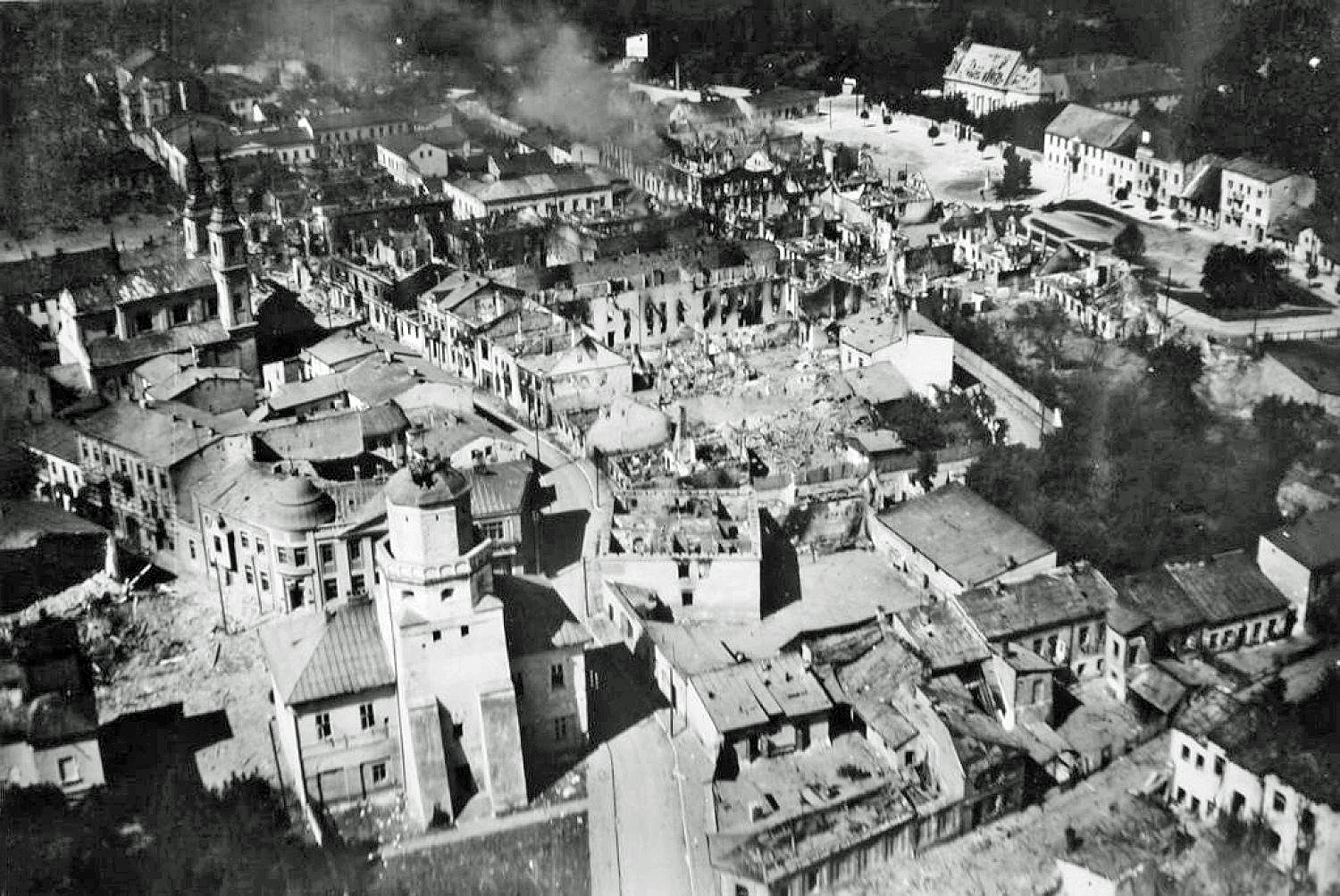
 Wieluń, 1 September 1939.
 Probably the first act of war, before the bombardment of the Westerplatte
 The 'Schleswig-Holstein' fires at Gdynia (Gdynia)
  captured Polish soldiers Westerplatte
 The brutal German occupation policies triggered an ever more willing to resist the population detected in the underground struggle. Its armed wing, the "Home Army" (Home Army), grew up in late 1943 to 350,000 men, besides the military resistance there were civilian structures of a "ground state", were among those schools, newspapers and magazines, and even theater.
The official terror against the Poles was full and uncompromising. Similar concessions, such as those in neighboring beispilesweise "Protectorate of Bohemia and Moravia made the Czechs were against, it does not. Only the indecision and disunity of the participating military and civilian authorities on the question of whether Poland exploit only or destroyed, were opened some chance of survival, which is of course after the German invasion of the Soviet Union fell so far back, as now the General Government in the gigantic included Germanisierungsplanung of Heinrich Himmler.
As the Poles were to become disenfranchised subjects of the "Third Reich" degraded and terrorized, it was their mental to break resistance and destroy its elites. This project was the Catholic Church, which had a leading role in significant ways. The German occupying forces concentrated their commitment to a non-Catholic faith and not banned his ceremonial exercise. They tolerated even that religion was told in the Polish population of great momentum, which is much said about how much the people at that time felt threatened. For priests, some bishops, secular politicians, and Catholic officials, however, the Nazis beat too hard. Among the groups that were sent in the first phase of occupation in the concentration camp, established the clergy is one of the largest dar. Many of them lost their lives there. This should those who remained at large, intimidate, and make them submissive signal that they are better of national initiatives can be the finger. More radical measures taken by the Germans against the whole clergy not, perhaps because they wanted an open conflict with the Vatican or prevent a further strengthening of the Polish will to resist.
a plastic difference I can tell you. In Prague, for example, were struck with large red poster, which was written on, today that seven Czechs had been shot. As I said to myself, if I wanted to let hang for every seven Poles shot a poster, then the forests of Poland would not suffice to produce the paper for such posters. Yes, we had a hard to access. Now, however, has already calmed down a lot. It's ghastly, Poland aufgeteit perfect, divided as it was never.
Some Nazis were able to endure the horror of the persecution Poland no longer gradual. The party Comrade Lily Jungblut, wife of an ethnic German landowner in the district Hohensalza, in a protest letter to Hermann Goering complained, "thousands and thousands of innocent people [had] been shot." self-interested Heydrich, less of humanity for discipline, grumbled about "the impossible part, uncontrollable acts of revenge" for self-protection.
If that would have resulted sooner would not have happened. But the Poles are very proud that you see in the dark, closed faces on the roadside, hate it and I can not blame them.
laid during the return march we again in Poland on a farm a break. The Polish squire was sitting with two ladies who made up and dressed by Paris Chic, on the terrace. Suddenly the order came immediately to march again. I went to the landlord and said, "we have gone!" - "I wish you good luck," he answered in German. "Will not you come along, you can not stay here but if the Russians are coming," I replied. "Where should we go?" We can not go anywhere yet, "he said sadly. This ease in the light its almost hopeless situation. I hear it today: I wish you luck.
We forgive and ask forgiveness.
Bingen, Dieter: Poland during World War II, in: Country Report Poland 2009th
The official terror against the Poles was full and uncompromising. Similar concessions, such as those in neighboring beispilesweise "Protectorate of Bohemia and Moravia made the Czechs were against, it does not. Only the indecision and disunity of the participating military and civilian authorities on the question of whether Poland exploit only or destroyed, were opened some chance of survival, which is of course after the German invasion of the Soviet Union fell so far back, as now the General Government in the gigantic included Germanisierungsplanung of Heinrich Himmler.
Jaworski, Rudolf; Lübke, Christian Müller, Michael G.: A short history of Poland.
As the Poles were to become disenfranchised subjects of the "Third Reich" degraded and terrorized, it was their mental to break resistance and destroy its elites. This project was the Catholic Church, which had a leading role in significant ways. The German occupying forces concentrated their commitment to a non-Catholic faith and not banned his ceremonial exercise. They tolerated even that religion was told in the Polish population of great momentum, which is much said about how much the people at that time felt threatened. For priests, some bishops, secular politicians, and Catholic officials, however, the Nazis beat too hard. Among the groups that were sent in the first phase of occupation in the concentration camp, established the clergy is one of the largest dar. Many of them lost their lives there. This should those who remained at large, intimidate, and make them submissive signal that they are better of national initiatives can be the finger. More radical measures taken by the Germans against the whole clergy not, perhaps because they wanted an open conflict with the Vatican or prevent a further strengthening of the Polish will to resist.
Holzer, Jerzy: Poland and Europe. Land, history, identity.
a plastic difference I can tell you. In Prague, for example, were struck with large red poster, which was written on, today that seven Czechs had been shot. As I said to myself, if I wanted to let hang for every seven Poles shot a poster, then the forests of Poland would not suffice to produce the paper for such posters. Yes, we had a hard to access. Now, however, has already calmed down a lot. It's ghastly, Poland aufgeteit perfect, divided as it was never.
Hans Frank, in: The official diary of the German Governor General in Poland, 1939-1945.
Some Nazis were able to endure the horror of the persecution Poland no longer gradual. The party Comrade Lily Jungblut, wife of an ethnic German landowner in the district Hohensalza, in a protest letter to Hermann Goering complained, "thousands and thousands of innocent people [had] been shot." self-interested Heydrich, less of humanity for discipline, grumbled about "the impossible part, uncontrollable acts of revenge" for self-protection.
Höhne, Heinz: The Order of the skull. The history of the SS
If that would have resulted sooner would not have happened. But the Poles are very proud that you see in the dark, closed faces on the roadside, hate it and I can not blame them.
diary Hans-Georg Bruhns after the battle of the Bzura, In: Bruhns, Wibke: My father's country. Story of a German family.
laid during the return march we again in Poland on a farm a break. The Polish squire was sitting with two ladies who made up and dressed by Paris Chic, on the terrace. Suddenly the order came immediately to march again. I went to the landlord and said, "we have gone!" - "I wish you good luck," he answered in German. "Will not you come along, you can not stay here but if the Russians are coming," I replied. "Where should we go?" We can not go anywhere yet, "he said sadly. This ease in the light its almost hopeless situation. I hear it today: I wish you luck.
memory fragment of Walter Otto, in: Schiiddekopf, Carl: war. Tales from the silence. German soldiers of the Second World War.
We forgive and ask forgiveness.
From the letter of the Polish Bishops to the German brethren 1965th


0 comments:
Post a Comment